My Top Choices for my Da Vinci Project

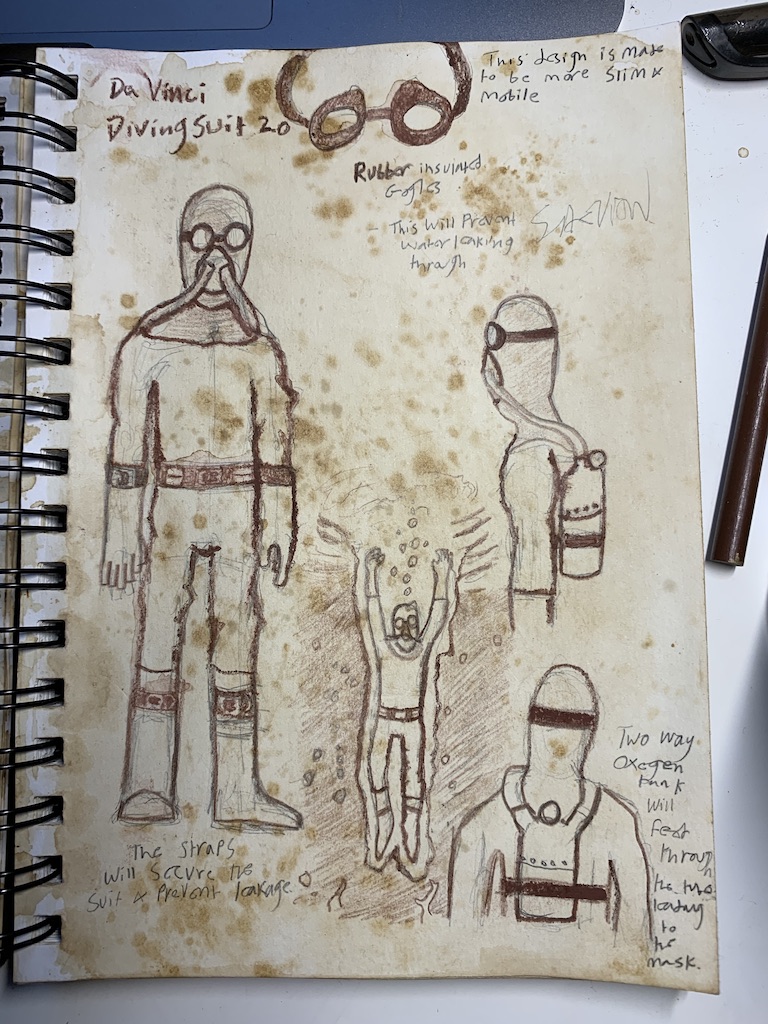
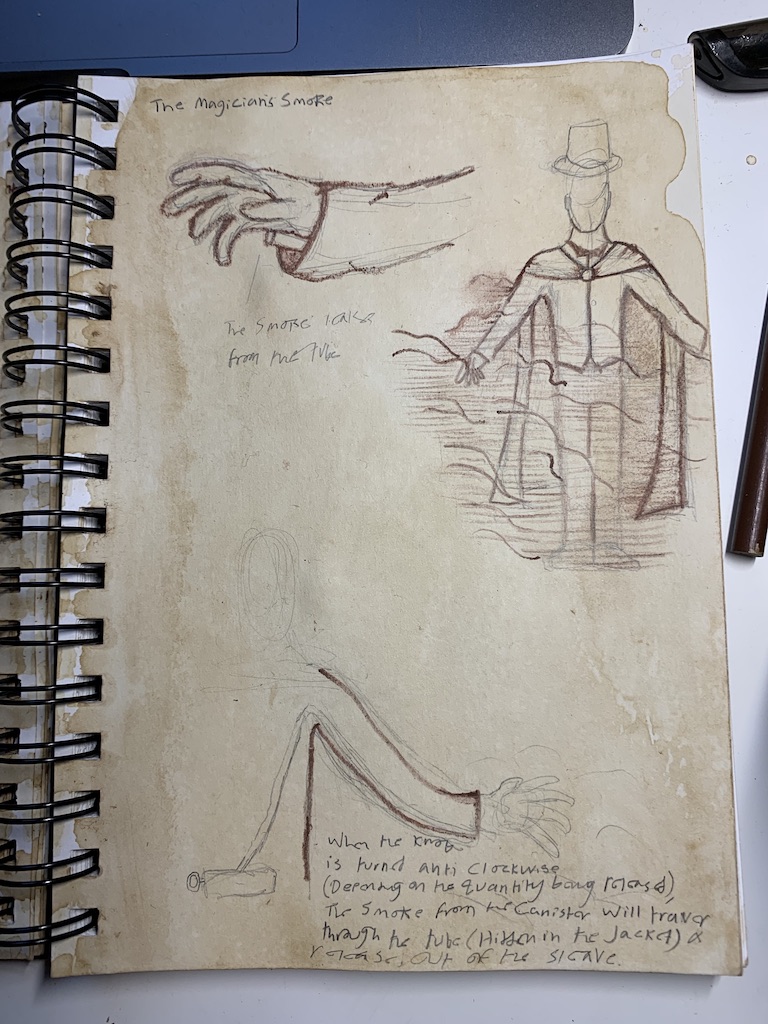
When it came to creating designs for my Da Vinci Project and creating more unique iterations of well known technology and reverting it back to Da Vinci’s time, I had to narrow down my ideas and select my ideas based on their design, function and overall interest in design and engineering them.

So through the many ideas and process of elimination, I managed to put together my own choices for my personal collection, starting with…….

The Prosthetic hand

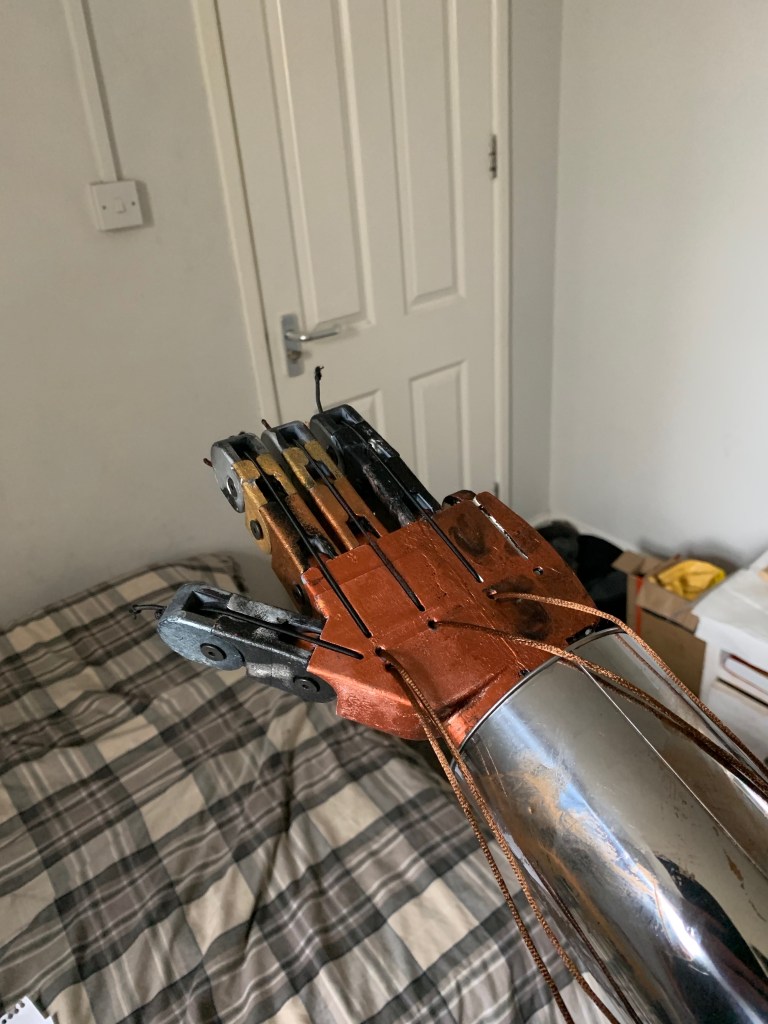
This design and model is by far my favourite and most ambitious idea, mainly because of all the work and process went into it, as well as its idea of functionality.

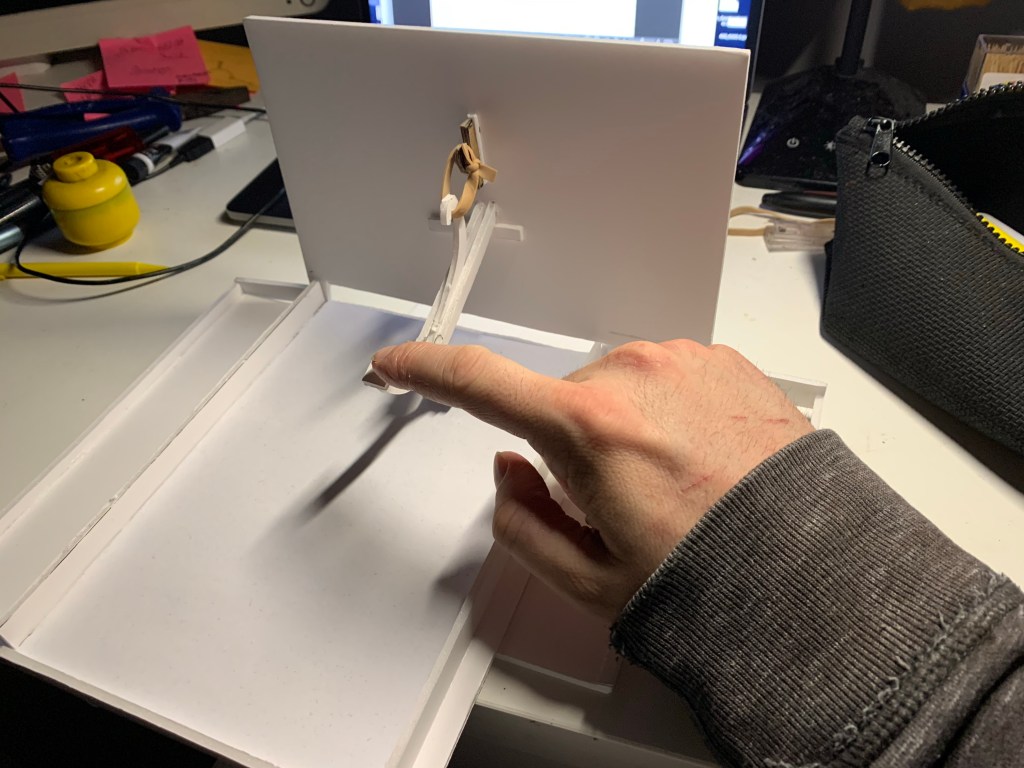
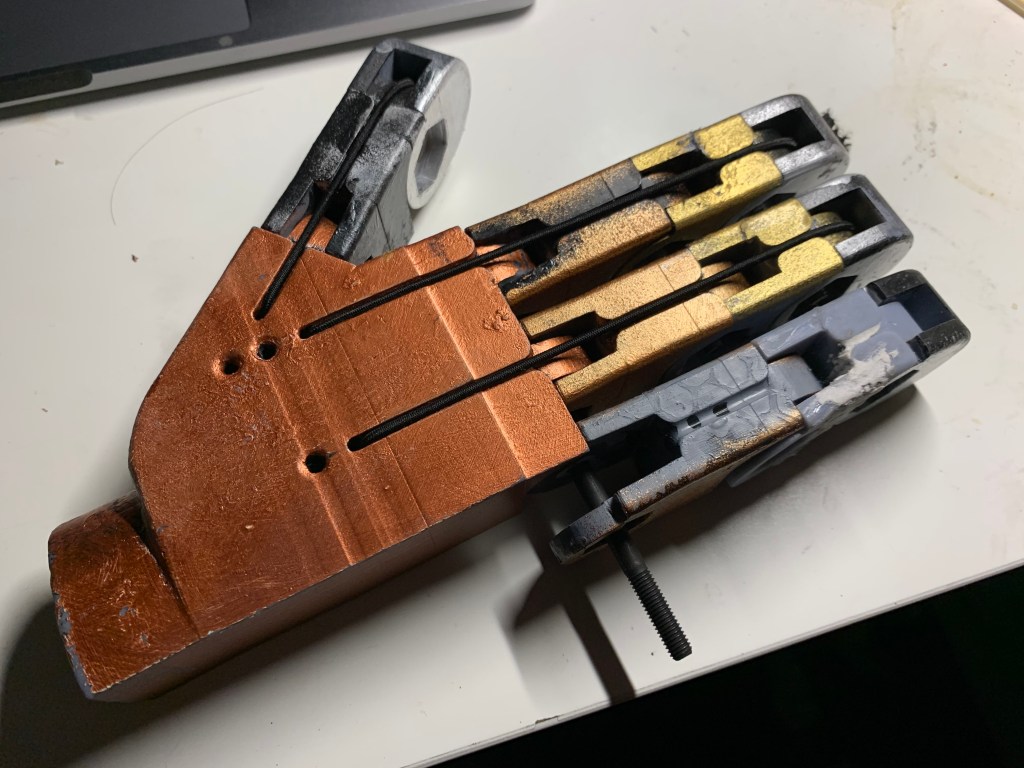
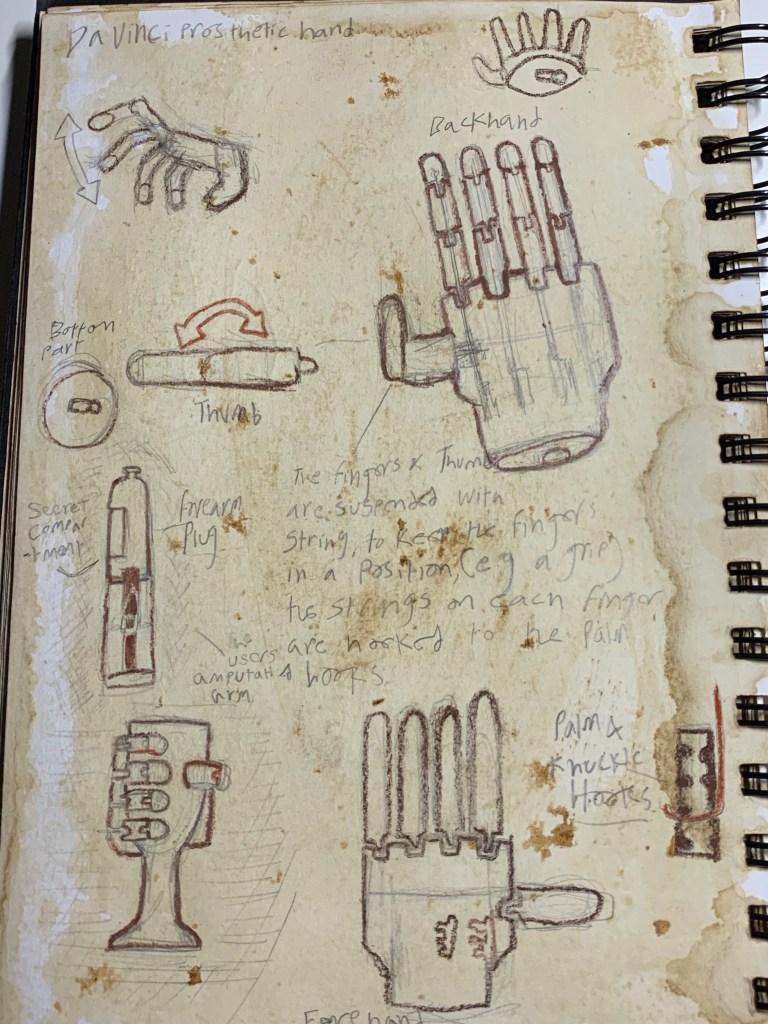
My original idea for the hand was to be operated by a series of strings that were connected to the fingers and to move them in position they would have to be pulled and hooked in place by the amputee, with two sets of five strings on the palm and backhand, it could be used to make a fist, give a thumbs up, point and even give the middle finger.

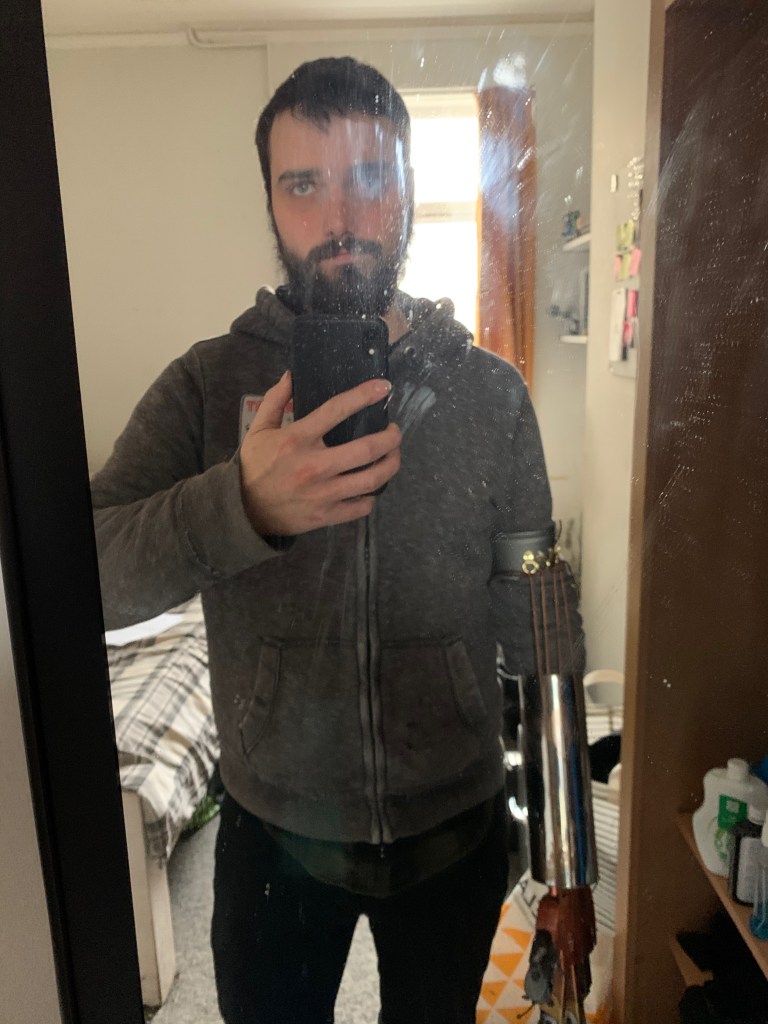
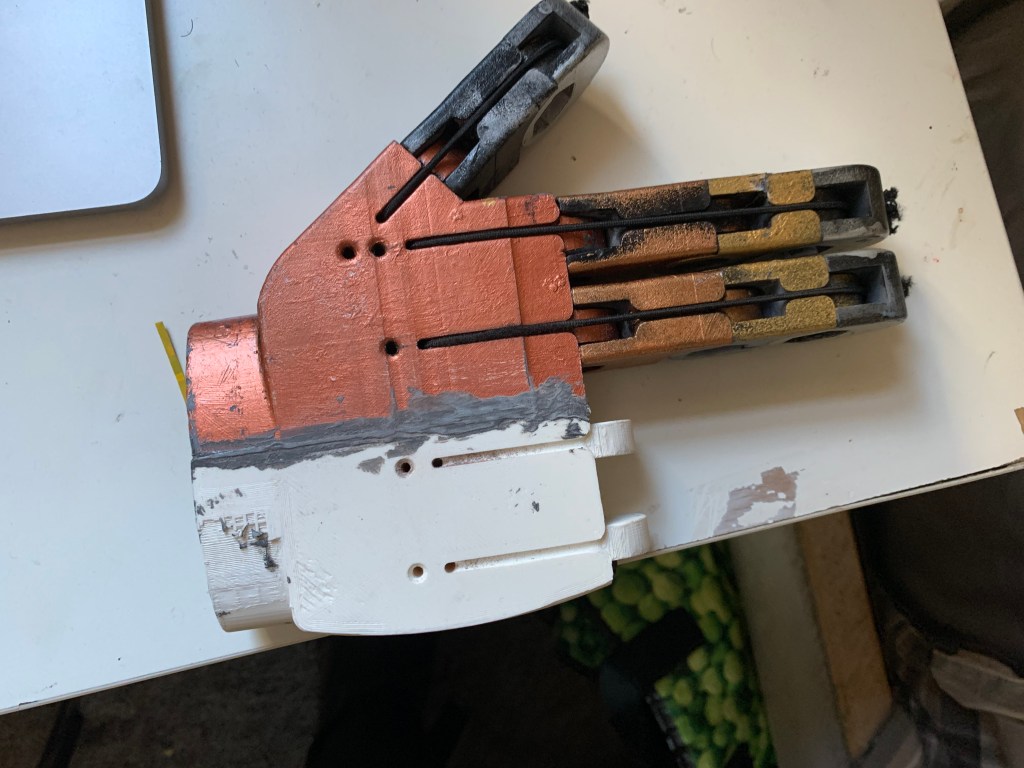
However, I wanted to take this idea further, so I designed and built a new prototype that was able to move on its own via arm movement.

Now the function was different compared to my original, however it still carries the idea and set of its predecessors, more specifically the the two series of strings connecting to the front and back of the hand.

The latest design consisted of elastic cord attached to the back hand and fed over each finger, this was so the fingers would stay up and the strings (attached to the muscle brace) would pull the fingers to form a fist.
The Type Writer

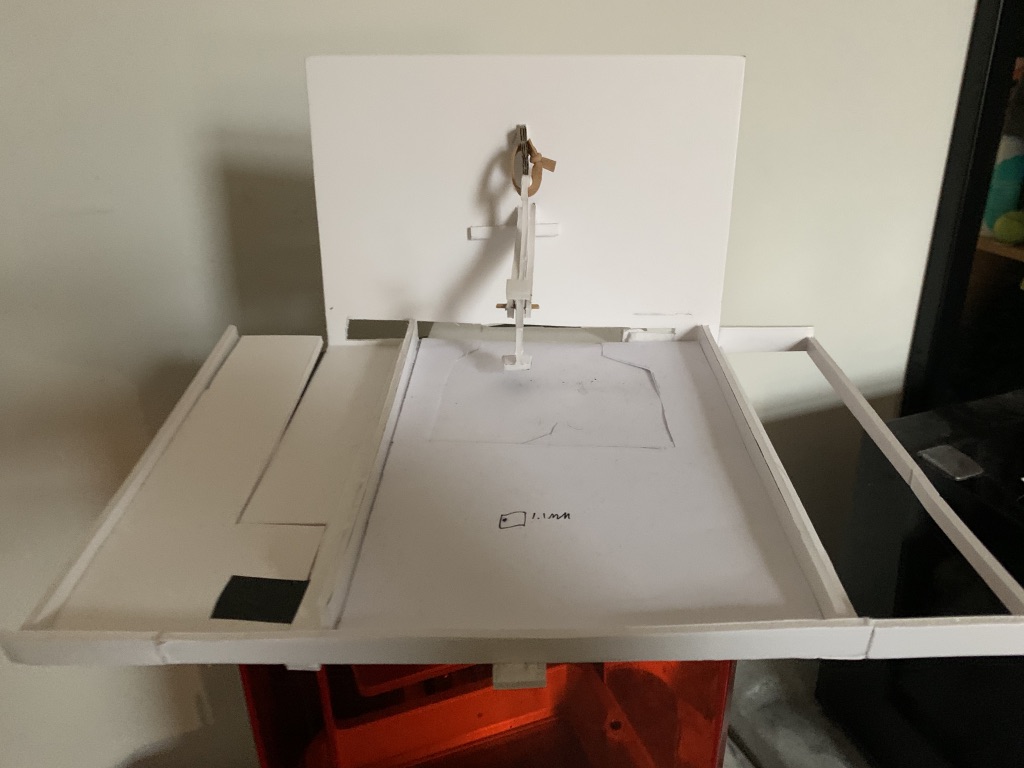
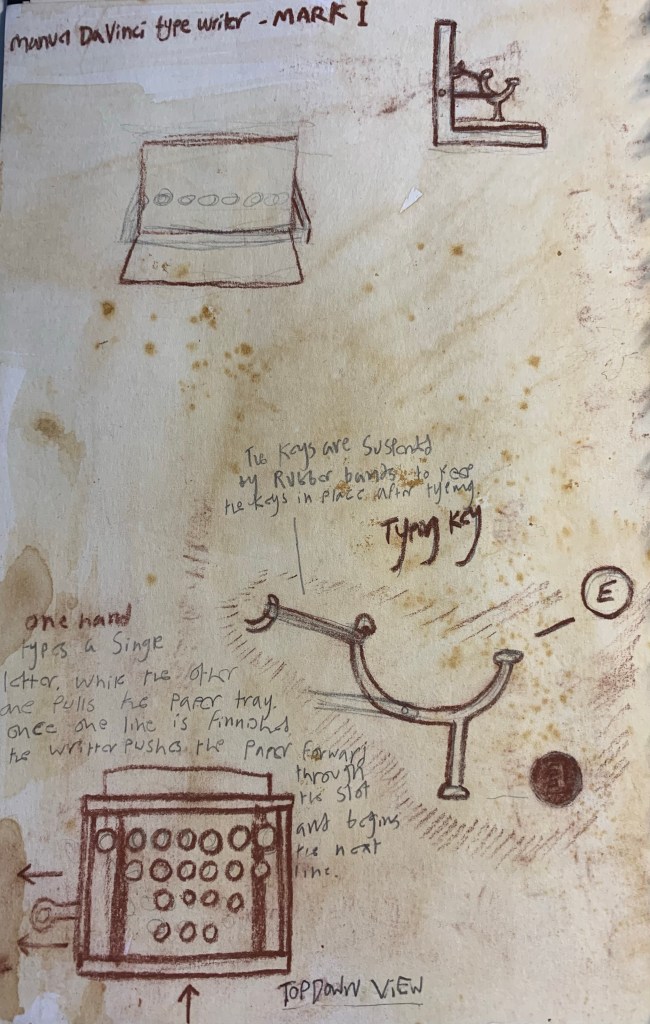
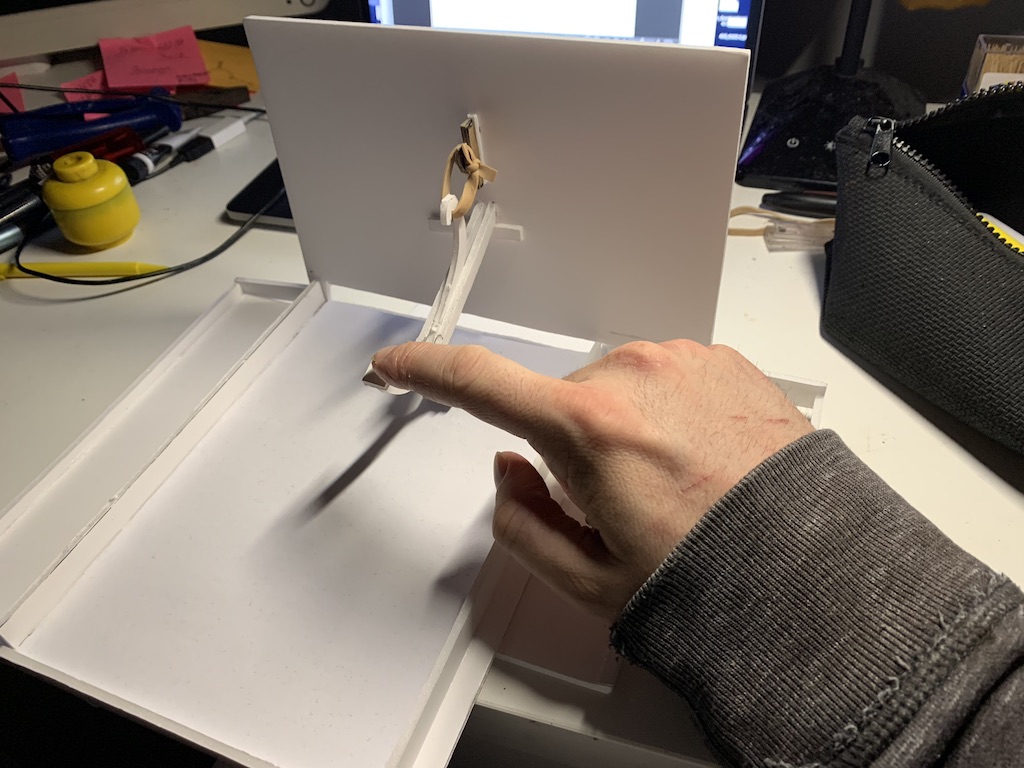
Like the hand my main idea for my typewriter function was elasticity, more specifically, each of the typing key would be suspended by rubber bands wrapped around the hooks, thus keeping them in place, so whenever the user types a key the rubber band then pulls the key back into place.
Glasses

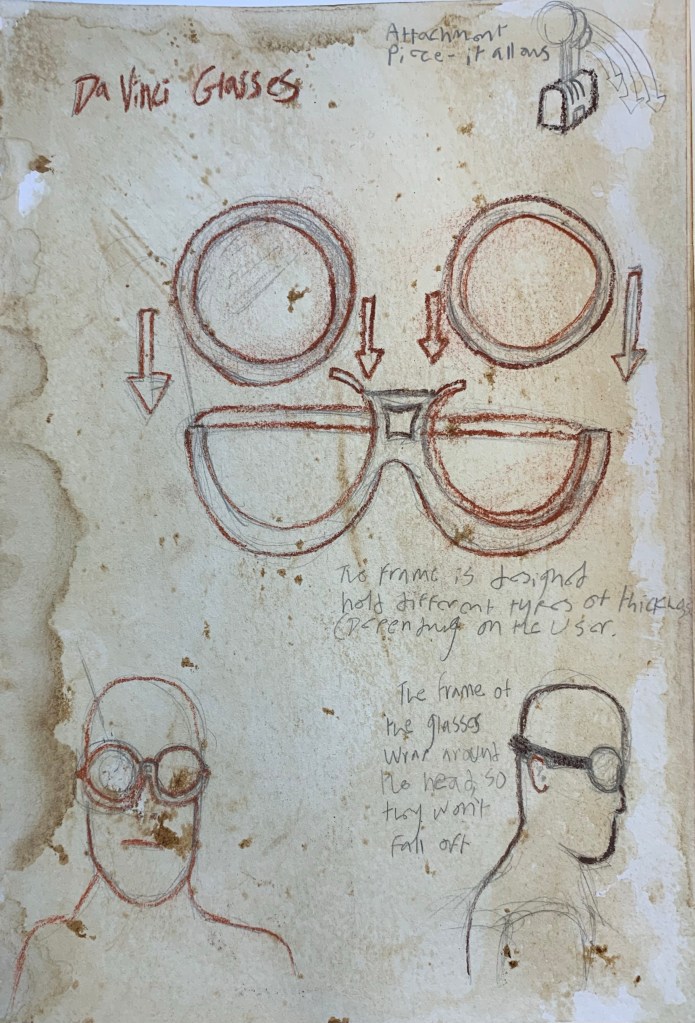
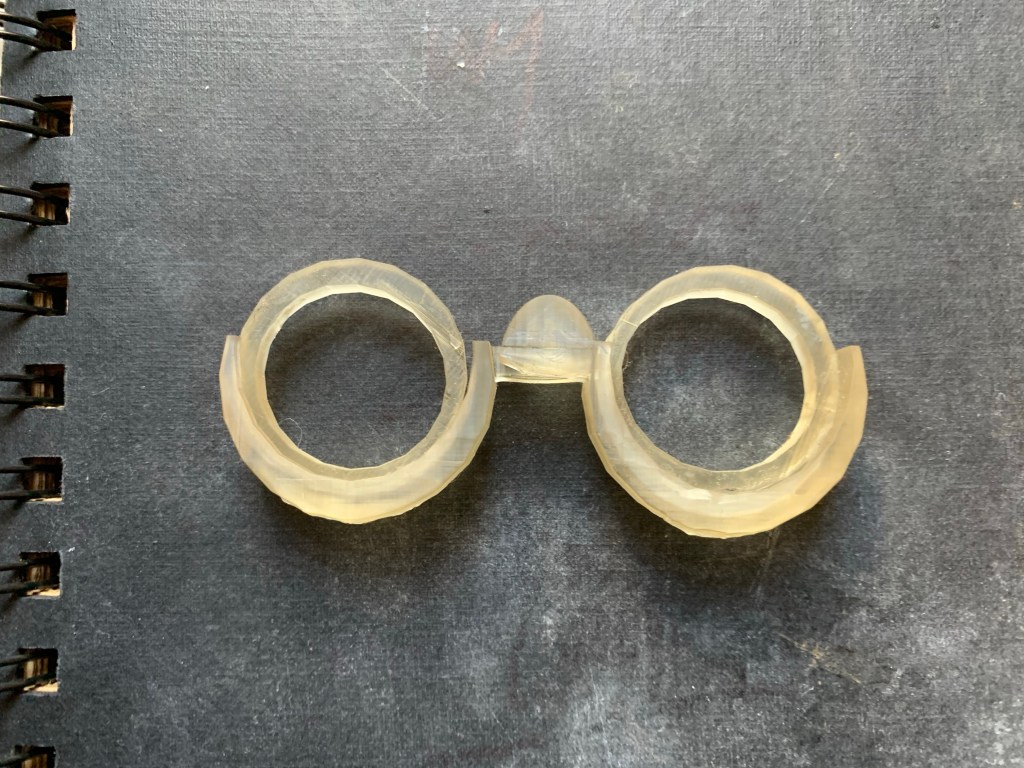
The glasses were a fairly simple design, for my version I wanted to give it two unique features, were you could switch out the lenses for a different thickness as time goes by, another feature I thought of was an attachment of multiple switch lenses for artists, scientists and/or model makers.
The Micro Scope

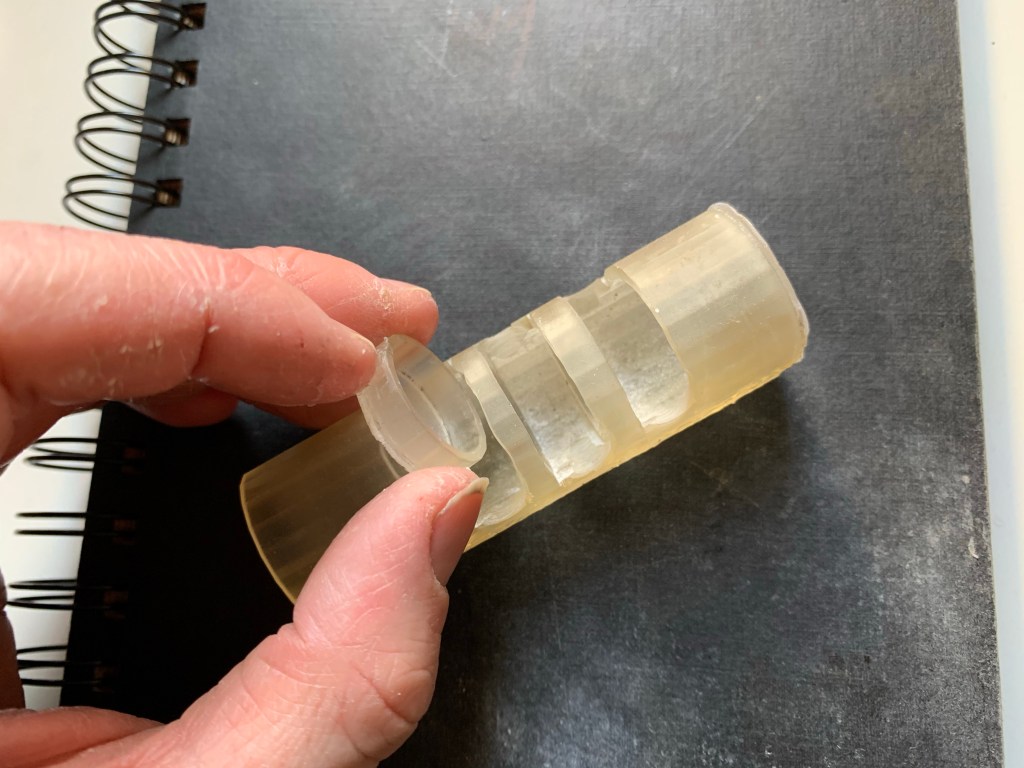
One of the microscopes features is similar to the glasses, were you can switch the thickness of lenses at anytime, however for this the lenses (I call Micro-discs) are inserted into the main shaft of the scope in order to get a closer look at the specimen.

One of the key ideas of this project was to recreate modern ideas in Da Vinci’s eye, this would either mean simplifying or overly complicating the designs of our current inventions, for the microscope, rather than turning the dial to zoom in for a closer look, the idea is to simply push down the upper scope for a closer look and using the micro-discs for an even closer look.

The reason I chose these particular kinds of inventions was because if Da Vinci was way ahead of his time, logically he was want to design and create inventions worthy of expanding his need for knowledge and research into medical and scientific technology.

For example if he wanted to further his research in science he would use the microscope to get a better understanding of the human or animal body, possibly expanding his knowledge in medicine.

He would also use this prothetic hand design to further the use of prosthetic to allow amputees of the renaissance to have easier lives, since it would a huge upgrade from a hook or wood/metal hand that doesn’t move.
Collect

on the 23rd of February, I and my class room were given an excercise at looking through the Collect exhibityion and it’s total of 36 collections and picking one or more as our favourites.

Collect is a collection of thirty two sculptural pieces and sets created by various artist, my favourite one in particular was the “House on Mars” Gallery, created by:

  • Attua Aparicio (ceramic)
  • Ela Bauer (plastic)
  • Ana Margarida Carvalho (metal)
  • Juliano Cordano (wood)
  • Faye Hall (textile, metal)
  • Zachary Herrmann (glass)
  • Karin Herwegh (wood)
  • Lambert Kamps (multimedia)
  • Peter Marigold (plastic)
  • Nicholas Marschner (metal)
  • Lina Peterson (wood)
  • Anna Ray (textile)
  • Zoe Robertson (plastic)
  • Alicia Rowbotham (textiles)

The collection showcases a set of jewelery and table wear made of wood and ceramic .

I like this collection for its design, colour scheme, shapes and how it reminds me of my collection idea for my final project, about my Da Vinci themed fantasy collection in creating five model of inventions/everyday appliances in the style of Da vinci designs and renaissance aesthetic, these include glasses, a type writer, a microscope and a prosthetic hand, etc.

A link to the exhibition:

https://www.craftscouncil.org.uk/collect-art-fair/collect-2021-exhibitors/house-on-mars-gallery

Exposure Part I

Artist Statement   

What?

I design and create Da Vinci themed models based on his designs (reimagined) and what current or old technology would look and function if he invented them, with this I want to create a fantasy collection to both express my interest in Da Vinci’s work and create new and different reimagining’s of old and current technology.

How?

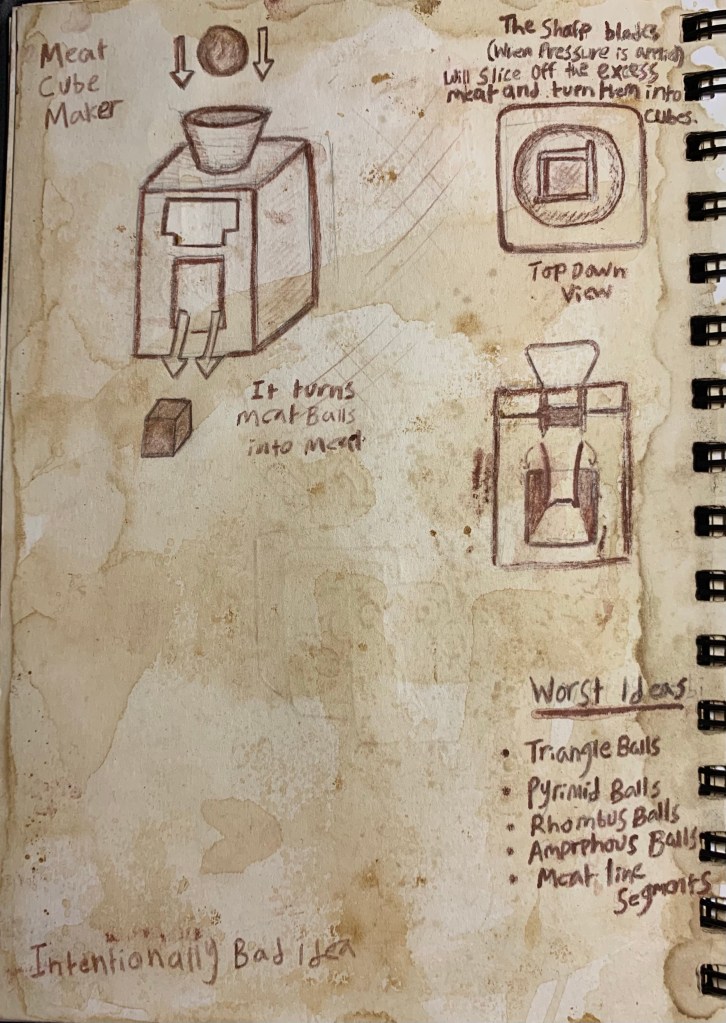
First, I draw these designs out in my Da Vinci sketchbook, to check if my design could work (in terms of either putting it together and possibly functionality), I would create a prototype using foam core poster board or card paper, once I’m happy with the design, layout and possibly functionality, I’d then start measuring the model and its pieces to program into cad, once all the shapes are copied into CAD, I then make them smaller for the 3D printer, because they don’t necessarily have to be too big.

Once all the pieces are printed, washed, dried and cured, I’d then start to paint each big in a particular colour scheme (the colour palate is supposed to represent the kinds of metal and material that Da Vinci would’ve used in his time to give a steampunk look, such as Gold, copper, bronze and silver), once all the pieces are painted, I’d either piece them together or drill holes in the pieces and suspend them on rods to create the look of an explosion, so it shows all of the pieces.

Why?

I chose this project because Da Vinci is my favourite artist and the best way to explore my interests in this project (as well as any other projects) is to create my unique models and designs, this can give me an opportunity to both create interesting interpretations of technology we know today and to think and build things like my favourite artist.

Current Progress

Currently, my work is in the design stages, where I am currently drawing new designs on a daily basis, these designs are either based on old fashioned or current technology and some of them are reimagined designs on Da Vinci’s designs to give them a slightly modern update while also containing that same renaissance aesthetic.

Once I have created enough designs and once, I go through the process of elimination, I will then have picked less than ten or possibly five designs for me to create on CAD, 3D print and decorate for display, each model will displayed with their own blueprint as well context behind each model.

Visuals of Practice

Collection Proposal

For my project, I intend to create 3D printed models of my designs inspired by Leonardo Da Vinci’s blue prints, these will either be reimagining’s of Da Vinci’s work or Da Vinci style iterations of old/modern technology.

For example, one of my ideas involve creating a typewriter that functions differently compared to a normal typewriter, the process includes using one hand to types the keys and the other to drag the paper tray to the left, once one line of writing is finished, the paper is then pushed through the slot at the back, the typing keys are suspended by rods that attach to the back, and to keep them in place (when typing) are hooked using rubber bands.

The final outcome will be a collection of models based my five chosen designs, each model will be displayed along with their own blueprints, these will include layouts of the pieces, their functions and their paragraphs containing context for their inspirations as well as their intended function (whether or not they would actually work).

Defined professional trajectory

Professional Practice

For this project, I intend to use professional CAD software to create intricate models based on my designs, during this I expect to gain and develop experience in CAD software, this could be very useful in my practice in designing and making, could look good on my C.V and would put my 3D printer to good use.

Marketing and Audiences

If I were to sell these models for profit, I would advertise and sell them on my website, while also including a “commissions” page where customers can request what they want to be 3D printed, if they wanted to, it could fit the theme of Da Vinci style designs (note: again, these Da Vinci models are more for show rather than function), or any kind of model they want.

The best way to get more customers to ask what they want (in terms of commissions) is by showing them what you can give them by producing and selling well designed and good quality prints as a way of getting more unique requests. The commissions page would have a text box that will go directly to my email, the customer would then type their request, the size they want they model to be and even hand drawn or digital designs and I would respond as soon as possible to let them know when they might be done as soon as possible.

The target audience for my work is anyone of any age who admires both the work and influence of Leonardo Da Vinci and those who love the idea of interpretations of both an artist’s work and the technology we know to this day, opening a fantasy collection of Da Vinci style pieces, made to look like he made and designed them. This is just a fun expansion on what I and a lot of people like, like my last project, when I built my second artefact, I was going for a direction of my model either being an ambitious model that explored my interest or a collectable and display model product that could be sold to many who share my interests in Da Vinci and fiction.

My Statement of Intent for Exhibition

This is my statement of intent of what I will be doing for my final project for the first five months of the new year in terms of research, context and craft.

My Idea

My idea is to create an exhibition displaying my 3D printed, Hand-crafted dioramas (with the pieces suspended on rods on a board of wood) based on my Leonardo Da Vinci style schematics of Movie props and common everyday appliances, each piece will be displayed on its own with its own description and final sketch in the style of Da Vinci’s work.

The Items I have chosen so far are:

  • A light saber (Star Wars)
  • The Flux Capacitor (Back to The Future)
  • A Pin hole camera
  • Desk Lamp
  • Type writer

E.D.G.E

Ethical– My project will involve CAD design, 3D printing and model making, all of these would make good practice in development in CAD and potentially starting my own commision business in selling 3D models to anyone who requests them, these models could be inventions, appliances, toys or models, so I believe that this project will be my guide into more of an understanding into the world of model making and business.

Digital– During the bowl and secondary artefact portion of the project, I was given the opportunity to expand more on my CAD skills and begin building bigger projects, this form of CAD is a step up from just placing small cubes into a pattern like my last major CAD project.

Global– During the months of first term, a few of my classmates have requested me to personally 3D print a model for their project (and some I’ve even offered), a very good idea to get the word out is by sending out a post on Facebook and Instagram, letting people know that I’m available to 3D print model for them at a price, not as much as commissions, but more as a 3D printer for hire, since I’ll request them to create the files themselves, due to me not having enough experience.

Entrepreneurial– With owning my own 3D printer and learning basic CAD skills, this style of craft opens up a lot of business opportunities, including starting up a commision business that involves creating and printing CAD files or even printing out CAD files created by my customers who request them, for example I’ve already had a few of my classmates request me to print for them for a small price.

Timeline

Each month will break down into a strategy that will start with research and practice and will slowly build up to my final model and design for my degree show.

January

  • Research in CAD- This will involve me doing extensive research about CAD design and quick tricks I could learn and how to operate professional industry standard (and possibly complex) CAD programs
  • Context- For this, I will be sketching many ideas for Da Vinci style ideas and writing about their functions
  • Reading and research on Da Vinci’s inventions as well as other forms of craft.

Reading Material:

  • Leonardo Da Vinci: Extraordinary Machines
  • Things Come apart 2.0: A teardown manual for modern living

February

  • CAD Development- learning to use more professional CAD software and continuously applying what I know and what I will learn
  • Incorporating designs into digital construction to learn the limitations of both the CAD software and what can be possible to put together.

March

  • I will be printing many prototypes of a variety of main and alternate designs for the project
  • Testing the prototypes for quality and possibly assembling and functionality

April

  • I will begin CAD work, printing and decorating the final models and writing up their descriptions
  • I will visualise and plan out where my exhibition will be and what the layout will be

May

  • Last finishing touches
  • Setting up my exhibition

My Evaluative Statement

Evaluation of the Bowl project

When I started planning out my bowl project, I knew instantly how I was going to do it, for my bowl, I wanted to give it a unique feature (seeing as how the theme for my project was collaboration). So I thought about using magnets again just like in my last project, so I came up with the idea of creating a bowl that could split in half, this would act as a visual representation of two of my Gesamt kunstwerk ideas and concepts coming together as one. During this first project I experimented with a variety of design ideas including a four piece split and using a 3D pen to create 3D elements.

After printing out a total of five prototypes, I settled on using one simple design of making a bowl that split into two magnetic parts that could also be used as shelves for fridges as well as other magnetic surfaces.

As for the decorative design, I would paint each piece in their own unique design based on which two Pecha Kucha designs, I decided to combine together. For this one, I did a pixelated portrait of myself and New York landmarks. When the pieces connect together it forms another painting on the inside of the bowl of a pixelated statue of Liberty as a visual way of two worlds coming together.

Evaluation of the Secondary artefact

For my Secondary artefact, I still wanted to keep the theme of collaboration going, so I decided to bring in a design I drew back when I made my Pecha Kucha, my design was a Leonardo Da vinci style schematic I drew showing the design of a lightsaber, (and one showing the flux capacitor, both sketches can be found on my sketches blog post) so I wanted to take this idea a step further by adapting the sketch as a 3D diorama showing all the pieces laid out and stylized in a steampunk look, This would give it a Da Vinci style appearance using the limited amount of resources he had given the time period. The context behind this is to create a fantasy collection of Da Vinci themed dioramas paying tribute to pop culture.

More context can be found on my secondary artefact post on my blog.

Desk Inventory

For this assignment, I’ll be conducting an inventory of my studio space based on its sensory stimuli and for each encounter, I’ll be writing from a number of perspectives.

Sight – I see my equipment, my models, my desk calendar, my postcards, my water flask, my spray paint cans, My inventory box, etc. Sometimes my desk is cluttered with tools and materials (depending on the project) such as clay, cardboard cuttings, my pens, pencils, craft knives, paper and whichever project(s) I’m working on

  • My models – On the shelf on my desk I have three raku clay models, a little statue and one 3D printed figurine.
  • My Inventory box-  The inventory box is a small wooden box I once made from wood induction last year, the box is smooth and the texture of it is slightly burned for decoration, on top is a pewter casted Avengers logo superglued on and inside the box it contains multiple tools and miscellaneous things such as pencils, paints, erasers, paperclips and a ball of string
  • My postcards- Each of my postcards are from multiple museums, each one based on an art piece
  • My Name signs – There are two models of my name, one of them I made out of coffee sticks, string, and hot glue and the other I made out of clay and glazed it green

Touch – Each item has its own unique touch, many of them feel smooth, others have a rough texture and other

  • The Clay Models- The clay models (when finished, unfinished or glazed) can feel cold, and if not handled with care, could break, the raku models have a slightly rough feel to them
  • My Notebooks – There are my three notebooks, my current one and my two old ones, each of them are customized, each one with a volume number, indicating which one was used in order, each page is filled handwritten notes, annotations, and sketches, some of the writing and sketching roughly written/drawn in, sometimes you can feel the pressure from pen go through the pages to the other.
  • My Inventory box- when opened it hold various tools and miscellaneous items, the box is smooth and the texture of it is slightly burned for decoration, on the front is a small hook lock on a hinge, on top is a pewter casted Avengers logo superglued on. The edges have also been carved.


Sound – Each item has it’s own unique sound, some are quiet and unnoticeable some are pretty distinctive

  • The Spraypaint cans- the spraypaint cans make a rattling sound when shaken
  • My Clay/plaster models- if one of my clay or plaster models were to break the sound of them smashing sound like glass. and some of them have a hollow sound, and if the plaster were to be stretched, it would create a creaking noise
  • The hinges on my inventory box squeak when opened

Smell – Each item has it’s own smell

  • My Inventory box has a faint but noticeable smell of burning wood, like burnt cardboard my clay models don’t have much smell to them
  • My plaster hand that I made last year still has traces of baby powder, from when I was using  it for latex tests, the baby powder smells sweet, like strawberries